From the Workshop · the same quiet, in other forms
The calm has a material culture.
Coloring is one way in. Around each pattern is a whole world you can hold, burn, or hear - a dye, a scent, a sound recorded in the place it comes from. We only make a thing if it has a source we can name. Everything here carries its plate, the way the patterns do.
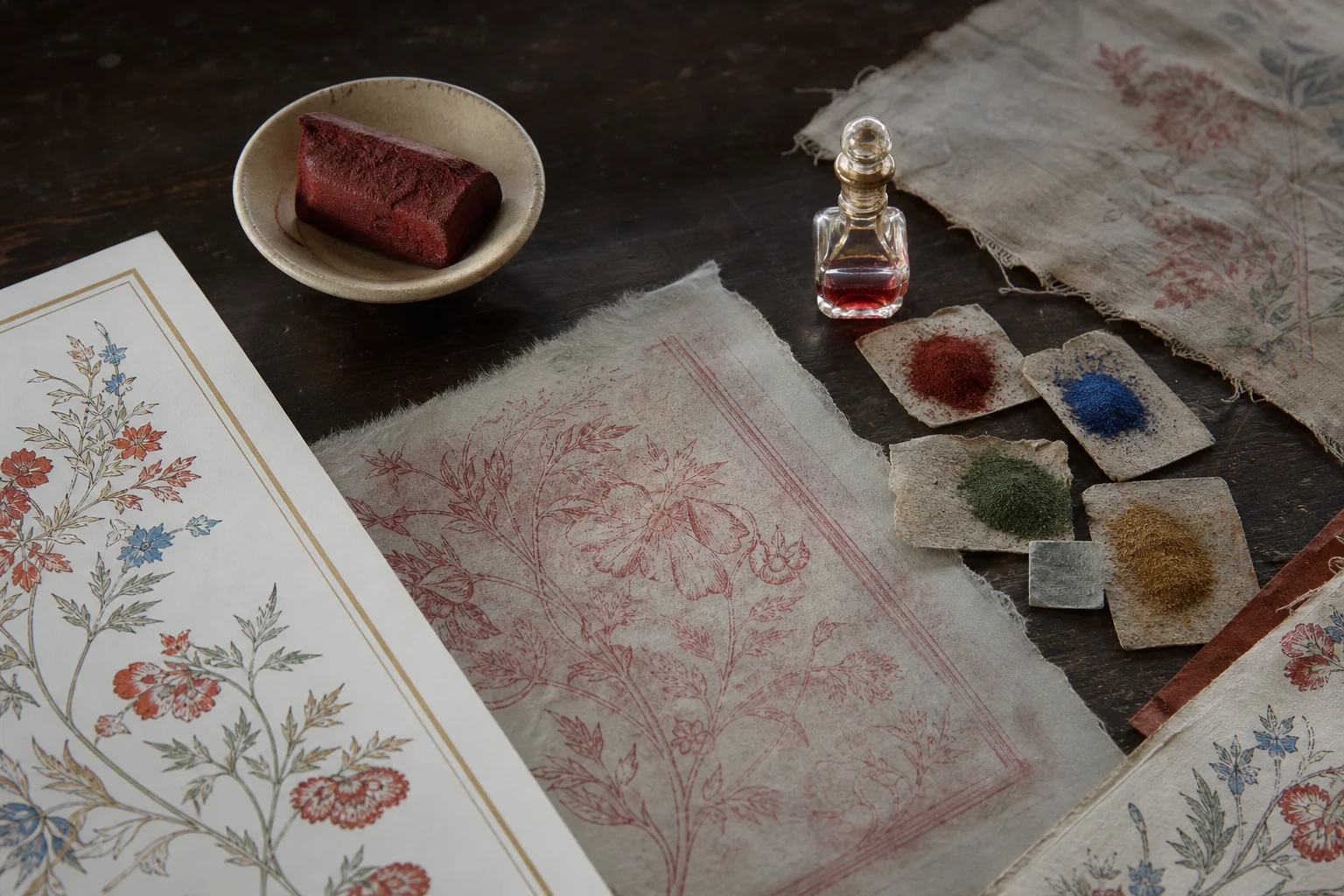
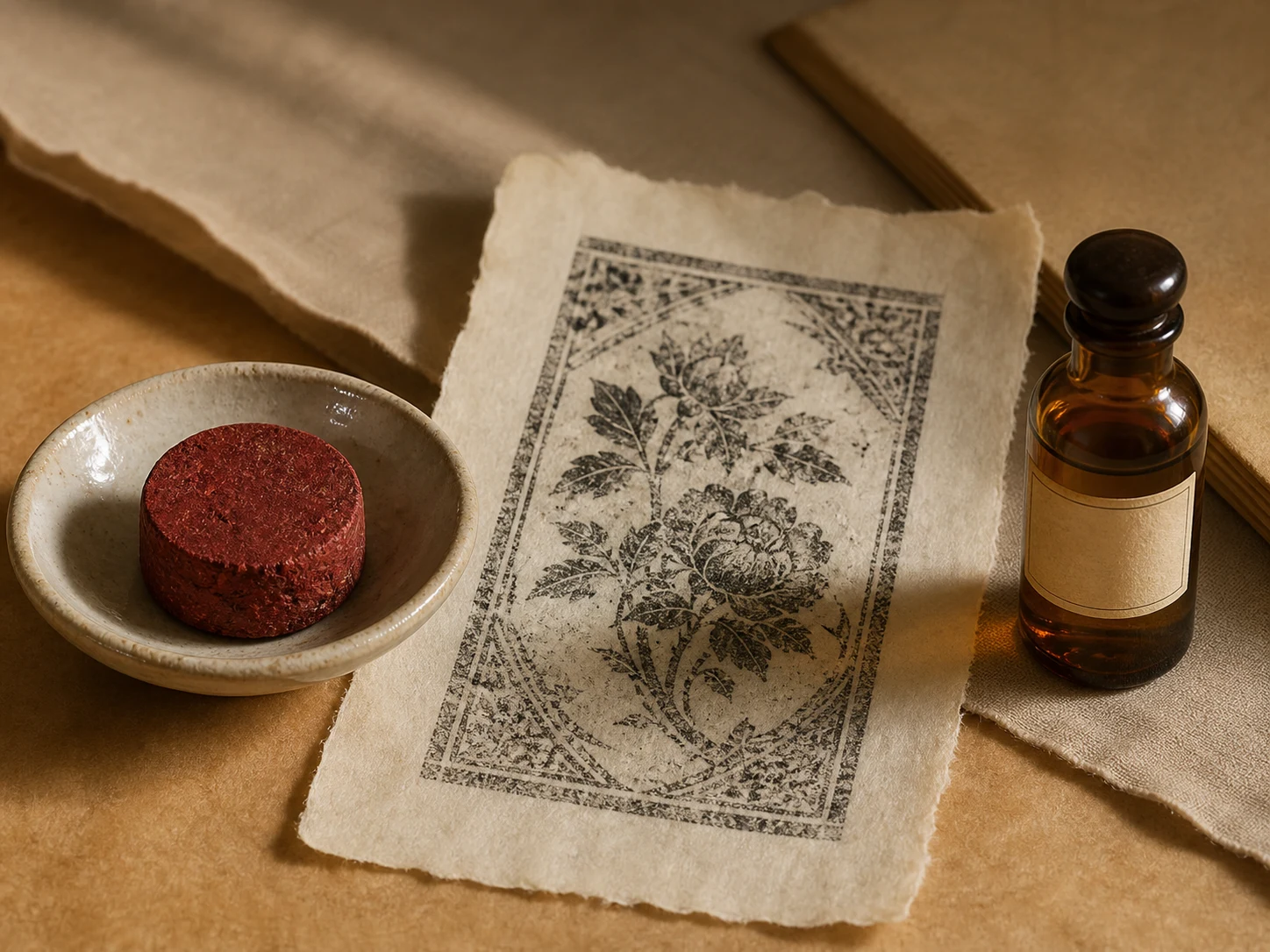
Madder رناس · a cake of natural dye
The red of the boteh page, in your hand. Grown, harvested and pressed the way Persian weavers have for three thousand years.
Provenance. Rubia tinctorum, cultivated in Kerman province, cake pressed by the Rahimi family workshop, the pigment behind Vol. I, Page 12.
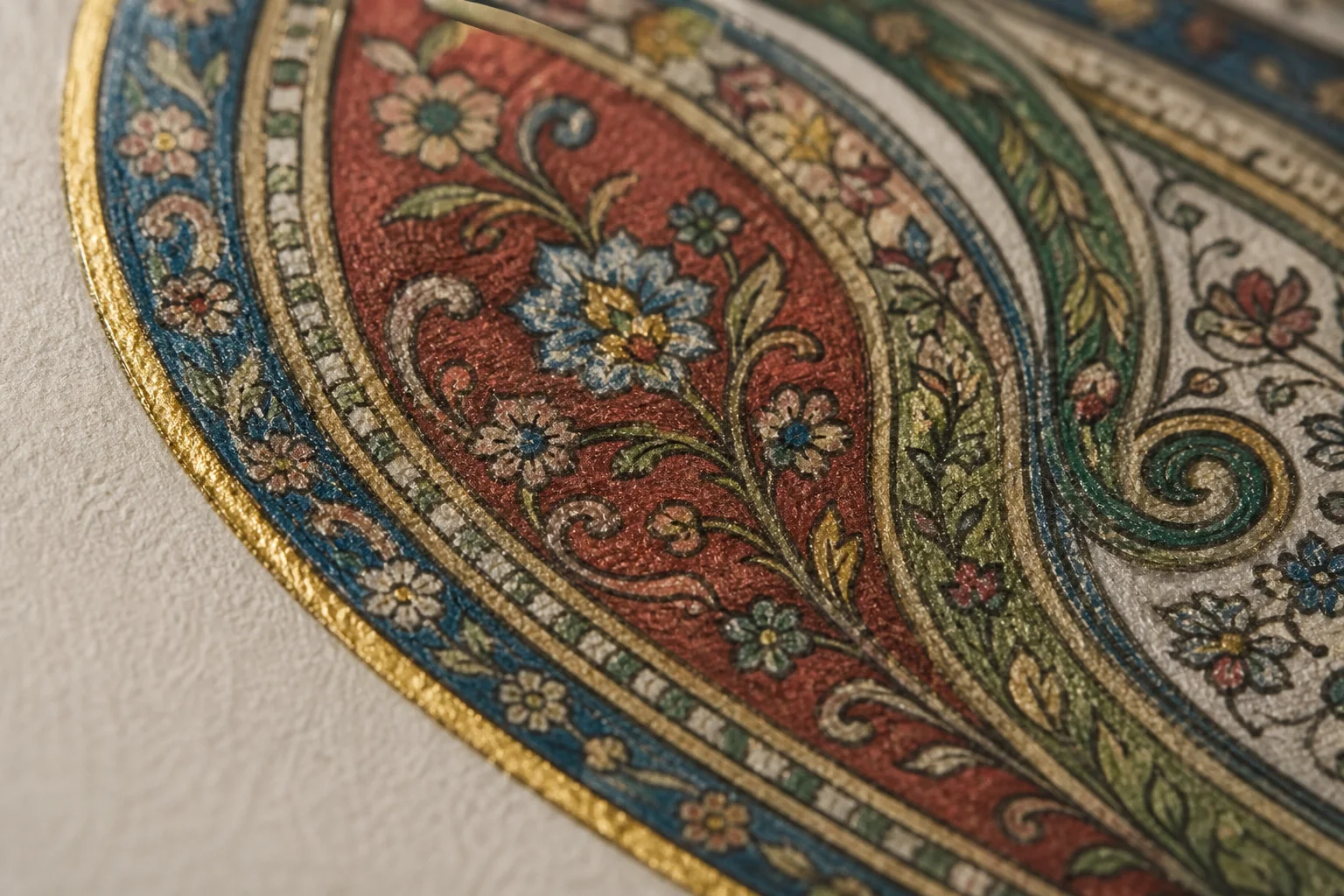
A rubbing 拓片 · ink-squeeze of a motif
A pattern taken the old way - inked and pressed from a carved block, so the paper remembers the surface. The technique is itself three thousand years old.
Provenance. After the East Asian 拓印 (tàyìn) rubbing tradition, Han dynasty onward, hand-pulled on mulberry paper, one of the Old World motifs.
The scent of a page attar · lamplight companion
The rose of Kerman, distilled - the flower whose gardens grew alongside the carpets. Lit while you color, or after. One scent per volume, no more.
Provenance. Rosa × damascena attar, Kerman rose harvest, distilled in copper, the garden behind Vol. I. Full ingredient and safety list on the object.
Why so little, so slowly? Because we hold every object to the same rule as every pattern: it earns a place only if it has a source we can cite. That is what keeps this a library and not a gift shop. A thing that cannot name where it comes from does not get made - no matter how well it would sell.